
Have you ever wondered how a comedian who started performing in small comedy clubs became one of the wealthiest entertainers in Hollywood? Kevin Hart’s journey is an interesting example of how talent, persistence, and business decisions can transform a career into a financial empire. His success did not happen overnight, and it did not come from acting alone.
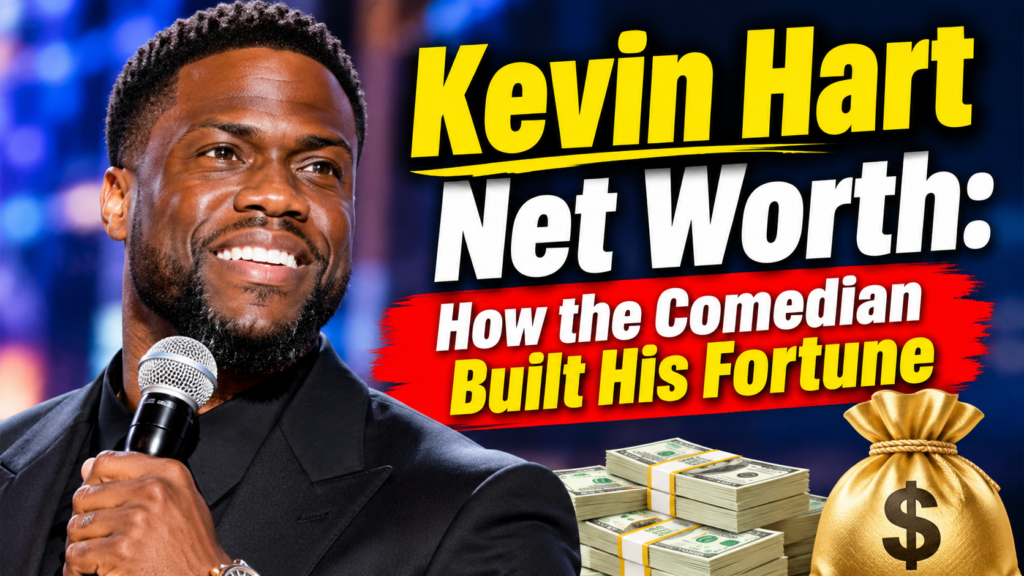
Kevin Hart net worth is a popular topic among fans who want to understand how much money the comedian has accumulated through stand-up performances, Hollywood movies, television projects, and business investments. Over the years, Hart has established himself as more than an entertainer. He has become a producer, entrepreneur, investor, and recognizable business personality.
Although different publications report different estimates of his wealth, his financial success is supported by a long list of commercial projects and business ventures. Understanding his fortune requires looking at his career, income sources, company ownership, and investments. This article examines how Kevin Hart built his wealth, what contributes to his estimated net worth in 2026, and what makes his financial journey different from that of many other comedians.
What Is Kevin Hart Net Worth in 2026?
Kevin Hart’s net worth is estimated at approximately $300 million to $400 million in 2026, according to different celebrity wealth publications.
Celebrity Net Worth estimates his fortune at $300 million, while Parade has published an estimate of approximately $400 million. These are independent estimates, not officially confirmed financial figures. Celebrity Net Worth+1
Hart himself has questioned the accuracy of online estimates. During a November 2025 interview with Complex, he was asked about the widely circulated $400 million figure and explained that people should not automatically trust everything they read online. Complex
His financial position is influenced by several sources:
- Stand-up comedy tours and comedy specials.
- Hollywood movie salaries.
- Television and streaming projects.
- Entertainment production companies.
- Brand partnerships and endorsements.
- Business investments and ownership interests.
- Other financial and personal assets.
It is important to understand that estimated net worth is not the same as annual income. It represents an estimated financial position after considering assets and liabilities.
Who Is Kevin Hart?
Kevin Hart is an American comedian, actor, producer, and entrepreneur known for his energetic performances and recognizable sense of humor.
He was born on July 6, 1979, in Philadelphia, Pennsylvania. His full name is Kevin Darnell Hart.
Hart developed an interest in comedy at a young age. He eventually began performing stand-up routines at local comedy clubs, where he worked to develop his stage personality and storytelling abilities.
His early career involved challenges, unsuccessful performances, and the difficult process of attracting an audience. However, his determination helped him gradually establish a reputation in the entertainment industry.
Today, Hart is recognized internationally for his comedy tours, film appearances, television projects, and business activities.
How Kevin Hart Started His Career
Kevin Hart’s career began with stand-up comedy rather than Hollywood acting.
After finishing high school, he decided to pursue entertainment. His first performances were relatively small, and he initially struggled to find his own comedic identity.
Instead of giving up, he continued performing and improving his material.
His early acting opportunities included appearances in movies such as Paper Soldiers, Scary Movie 3, and Soul Plane. These roles helped him gain experience and introduce his personality to a wider audience.
His career received greater attention through projects such as Think Like a Man and Ride Along.
As his popularity increased, he began receiving opportunities to work with established Hollywood actors and major production companies.
One important factor behind his success was his ability to combine personal storytelling with physical comedy. His performances often draw on everyday experiences, relationships, family situations, and embarrassing moments.
This style helped him connect with audiences who appreciated humor that felt familiar and relatable.
Kevin Hart’s Biggest Sources of Income
Kevin Hart has developed several income streams throughout his career. Rather than depending on one entertainment category, he has expanded into different industries.
1. Stand-Up Comedy Tours
Stand-up comedy remains one of the foundations of Hart’s financial success.
His comedy tours have attracted large audiences, allowing him to perform in major theaters, arenas, and stadiums.
Some of his notable tours include:
- Laugh at My Pain
- Let Me Explain
- What Now?
- Irresponsible
- Reality Check
His What Now? tour reportedly generated more than $100 million in worldwide ticket revenue. This demonstrates the commercial strength of his live performances. About Netflix+1
However, gross ticket revenue is not the same as personal profit.
Touring requires expenses for production, transportation, employees, venue arrangements, promotion, and management.
Nevertheless, a successful comedian with a large audience can generate considerable income from live performances.
2. Hollywood Movie Salaries
Acting has become another major contributor to Kevin Hart’s fortune.
His popularity increased through comedy films, action comedies, family entertainment, and dramatic performances.
Some of his best-known movies include:
| Movie | Release year |
|---|---|
| Think Like a Man | 2012 |
| Ride Along | 2014 |
| Get Hard | 2015 |
| Central Intelligence | 2016 |
| The Secret Life of Pets | 2016 |
| Jumanji: Welcome to the Jungle | 2017 |
| The Upside | 2019 |
| Jumanji: The Next Level | 2019 |
His involvement in commercially successful movies has strengthened his position as a bankable Hollywood entertainer.
Netflix previously reported that films featuring Hart had generated more than $4 billion in worldwide box office revenue at the time of its 2021 announcement. About Netflix
His personal movie earnings depend on individual contracts. A leading actor may receive a guaranteed salary, performance bonuses, or additional compensation based on negotiated agreements.
It would be misleading to assume that all money earned by his movies goes directly to him.
3. Television and Streaming Projects
Streaming platforms have created additional opportunities for Hart to reach international audiences.
He has participated in comedy specials, television productions, interviews, and digital entertainment projects.
One of his notable releases was Zero F**ks Given, which became a major Netflix comedy special in 2020.
His relationship with Netflix also expanded through a multi-year agreement involving feature films and production opportunities for his company.
These arrangements allow entertainers to earn money through acting, producing, developing concepts, and licensing entertainment content.
The advantage of this business model is that income opportunities are not limited to traditional movie theaters.
4. Hartbeat Entertainment
Hartbeat is one of the most important parts of Kevin Hart’s entrepreneurial career.
The entertainment company developed through the combination of his production business and Laugh Out Loud, his digital comedy network.
Hartbeat focuses on entertainment production, film and television projects, branded content, and other creative opportunities.
In 2022, the company received a $100 million investment from private equity firm Abry Partners. The transaction valued Hartbeat at approximately $650 million at that time. Los Angeles Times+1
This valuation attracted attention because it demonstrated how Hart had moved beyond earning money as an individual performer.
However, a company’s valuation should not be confused with its founder’s personal wealth. Ownership percentages, investment agreements, company expenses, and changing business conditions all affect the actual financial value of an individual’s stake.
An important financial lesson: Building an entertainment company can create opportunities beyond personal appearances. A production business can potentially earn revenue from projects involving other performers and creators.
5. Brand Endorsements and Commercial Partnerships
Kevin Hart has worked with various companies to promote products and services.
His popularity makes him attractive to businesses looking for a recognizable personality who can connect with a broad audience.
His commercial partnerships have included brands associated with:
- Sports and athletic clothing.
- Financial services.
- Fitness and wellness.
- Consumer products.
- Entertainment and technology.
He has also worked with companies such as Nike, Chase, Fabletics, and Tommy John.
The financial details of individual endorsement agreements are generally private. However, partnerships can generate income through advertising campaigns, promotional appearances, and longer-term commercial agreements.
Hart’s approach also involves looking beyond traditional advertising. He has pursued business relationships that provide opportunities for ownership and investment.
6. Business Investments
Hart has expanded his financial interests into several consumer businesses.
Some notable ventures include:
Gran Coramino: A tequila brand co-founded by Hart and entrepreneur Juan Domingo Beckmann. The business combines Hart’s public profile with an established background in the beverage industry.
VitaHustle: A wellness and nutrition business that reflects Hart’s interest in fitness and healthy living.
Hart House: A plant-based fast-food venture that attracted attention when it launched. However, the restaurant business closed its locations in 2024, demonstrating that celebrity involvement does not guarantee commercial success.
HartBeat Ventures: An investment initiative associated with Hart’s interest in supporting businesses and entrepreneurial opportunities.
These ventures illustrate an important part of his financial strategy: using entertainment success to create opportunities in other industries.
Not every investment succeeds, and individual business valuations are not necessarily publicly available.
How Much Does Kevin Hart Make Per Year?
Kevin Hart’s annual income varies depending on his professional schedule, movie contracts, comedy tours, and business activities.
Celebrity wealth publications have estimated that he can earn approximately $50 million to $60 million in a strong touring and entertainment year. However, this should be treated as an estimate rather than a guaranteed annual salary. Parade+1
His earnings can come from several activities during the same year.
For example, he might receive compensation for a film, perform live comedy shows, produce a television project, and participate in commercial campaigns.
These activities can create multiple revenue streams.
It is also important to distinguish gross earnings from personal income. Business expenses, taxes, management fees, and investment costs affect the amount he ultimately retains.
Kevin Hart’s Business Strategy and Financial Challenges
One of the most interesting aspects of Hart’s career is his transition from entertainer to business owner.
He has repeatedly explained that he wants to participate in the business side of entertainment instead of simply receiving payment for individual performances.
His approach has involved three important strategies.
Turning Fame Into Business Opportunities
A recognizable personality can help a new business attract customers and establish initial awareness.
Hart has used his popularity to introduce brands, support products, and develop commercial partnerships.
However, successful businesses require more than celebrity recognition. Product quality, customer experience, management, and financial planning remain essential.
Creating Businesses That Can Operate Beyond Him
Hartbeat was developed with the ambition of producing entertainment that would not always depend on Hart personally appearing in every project.
This is an important distinction between being a performer and operating a company.
A performer earns money from personal work, while a business can potentially generate revenue through employees, production agreements, licensing, and partnerships.
Understanding Business Risks
Hart’s entrepreneurial journey has also demonstrated that large investments and impressive company valuations do not guarantee permanent success.
In 2026, reporting about Hartbeat described internal difficulties, business restructuring, and changes to the company’s operations. Its earlier $650 million valuation should therefore be understood as a historical transaction valuation, not a confirmed current market value. Los Angeles Times+1
This provides a useful reminder that even successful entrepreneurs face market changes and operational challenges.
Kevin Hart’s Lifestyle and Assets
Kevin Hart’s financial success has allowed him to enjoy a comfortable lifestyle.
He has been associated with luxury homes, expensive vehicles, premium travel, and other high-value purchases.
However, personal spending should not be confused with wealth accumulation.
A luxury home may represent a valuable asset, but its actual financial contribution depends on its purchase price, current market value, mortgage balance, and maintenance expenses.
Similarly, expensive vehicles generally involve depreciation and ongoing costs.
When examining Hart’s financial position, it is more useful to consider his long-term business interests and earning potential than to focus exclusively on luxury purchases.
Does Kevin Hart Invest His Money?
Yes. Hart has discussed his involvement in investments and entrepreneurial projects beyond entertainment.
His business interests demonstrate that he understands the importance of building financial opportunities outside traditional acting and comedy.
His involvement in venture investing and consumer brands suggests an interest in companies that can grow beyond his personal entertainment career.
However, the complete details of his investment portfolio are not publicly disclosed.
Kevin Hart Compared With Other Famous Comedians
Kevin Hart belongs to a group of entertainers who have successfully transformed comedy careers into broader commercial businesses.
His financial journey can be compared with other well-known comedians.
| Comedian | Main sources of wealth |
|---|---|
| Kevin Hart | Comedy, films, production, investments |
| Jerry Seinfeld | Television, comedy, syndication |
| Dave Chappelle | Stand-up, comedy specials, entertainment |
| Chris Rock | Stand-up, films, television, production |
| Adam Sandler | Acting, production, streaming agreements |
Each entertainer has followed a different financial path.
Seinfeld benefited significantly from the long-term commercial value of his television work. Sandler expanded his career through production and streaming agreements. Hart has pursued a combination of live entertainment, film work, brand partnerships, and business ownership.
Comparing celebrity net worth estimates requires caution because the figures are not calculated using identical methods.
What Can Entrepreneurs Learn From Kevin Hart?
Kevin Hart’s career provides several practical lessons for people interested in building businesses and improving their financial position.
1. Start With a Skill
Hart initially focused on becoming a better comedian.
He spent years developing his performances before becoming a major Hollywood personality.
This demonstrates the value of building a strong foundation before pursuing larger opportunities.
2. Build a Recognizable Brand
A personal brand can help people establish trust and attract opportunities.
Entrepreneurs can apply this lesson by developing expertise, communicating consistently, and creating products or services that provide genuine value.
3. Develop Multiple Income Sources
Depending entirely on one source of income can create financial vulnerability.
Hart’s career demonstrates how different professional activities can complement one another.
For example, an entrepreneur might combine service income, digital products, investments, and business ownership.
4. Understand the Difference Between Revenue and Profit
A business can generate substantial sales without producing an equally impressive profit.
Hartbeat’s history illustrates why company valuation, investment capital, operating performance, and personal wealth must be evaluated separately.
5. Accept That Not Every Investment Will Work
Business development involves uncertainty.
Even well-known entrepreneurs can experience unsuccessful projects, changing market conditions, and unexpected expenses.
A practical approach involves researching opportunities, understanding risks, and avoiding assumptions that popularity automatically guarantees profitability.
Frequently Asked Questions
1. What is Kevin Hart’s net worth in 2026?
Kevin Hart’s estimated net worth in 2026 ranges from approximately $300 million to $400 million, depending on the publication. These figures are estimates rather than verified financial statements. His wealth comes from comedy, acting, production, business interests, and investments.
2. How did Kevin Hart become wealthy?
Kevin Hart became wealthy through a combination of stand-up comedy, Hollywood movies, television projects, and business ventures. His comedy tours helped establish his financial foundation, while successful films expanded his earning potential. He later developed entertainment companies and invested in consumer brands.
3. How much does Kevin Hart earn from movies?
His movie earnings depend on the size of his role and individual contractual agreements. Some entertainment publications have reported that he can command substantial salaries for leading roles, potentially reaching around $20 million for certain projects. However, his exact compensation for individual films is not always publicly confirmed.
4. Does Kevin Hart own an entertainment company?
Kevin Hart is the founder and chairman of Hartbeat, an entertainment business developed from his earlier production and digital media ventures. The company has worked across film, television, digital content, and branded entertainment. Its historical valuation should not be treated as the same thing as Hart’s personal wealth.
5. Is Kevin Hart richer than other comedians?
Kevin Hart is among the wealthiest contemporary comedians, although comparisons depend on how individual fortunes are calculated. Comedians such as Jerry Seinfeld have also accumulated substantial wealth through television, live performances, and business activities. Public net worth estimates are not audited, so exact rankings should be treated cautiously.
6. Does Kevin Hart have investments outside entertainment?
Yes. Hart has participated in businesses involving consumer products, wellness, beverages, and venture investing. Gran Coramino and VitaHustle are examples of ventures associated with him. These investments demonstrate his interest in building commercial opportunities beyond acting and stand-up comedy.
Conclusion
Kevin Hart’s financial journey demonstrates how a successful entertainment career can develop into a much larger business operation. Starting with small comedy performances, he gradually built an international audience through stand-up comedy, acting, and television.
His estimated net worth of $300 million to $400 million in 2026 reflects the scale of his professional success, although the exact amount remains unverified.
His most important financial achievement may not be any individual movie salary or comedy tour. It is his effort to move beyond performing and become involved in production, investments, partnerships, and business ownership.
There have also been challenges along the way, particularly in the business world, showing that financial success requires continuous adaptation.
For aspiring entrepreneurs and entertainers, Hart’s story offers a valuable lesson: developing a skill can open doors, but building sustainable wealth often requires turning those opportunities into long-term business interests.